






Start with Your Baby’s Age or the Question You Have Today

Say your 2-month-old keeps waking at night: go to newborn sleep patterns. Wondering whether your crib is safe for sleep? Use the safe-sleep checklist. Both are bedtime questions, and each has its own guide.
- Expecting a baby: Getting ready for baby covers where the baby sleeps, how they travel, and the first supplies.
- Starting from age: The baby-by-age guides show what changes over the coming months.
- Working on a task: Pick feeding, everyday care, sleep, development, gear, safety, or play.
Approaching six months and thinking about first foods? The starting-solids guide covers age and readiness together.
Know When to Seek Help Before Reading Another Guide
Contact your pediatrician immediately: According to the American Academy of Pediatrics, a baby 3 months old or younger with a rectal temperature of 100.4°F (38°C) or higher needs immediate pediatrician contact, even without other symptoms.
See the AAP’s guidance on fever in babies.
For a suspected emergency, get emergency medical help right away. Babies born prematurely or with complex medical conditions may need individualized advice from their clinical team.
For other health questions that aren’t urgent, the baby health guide helps you sort out what to ask your pediatrician.
Find the Right Guide for Your Baby’s Current Stage
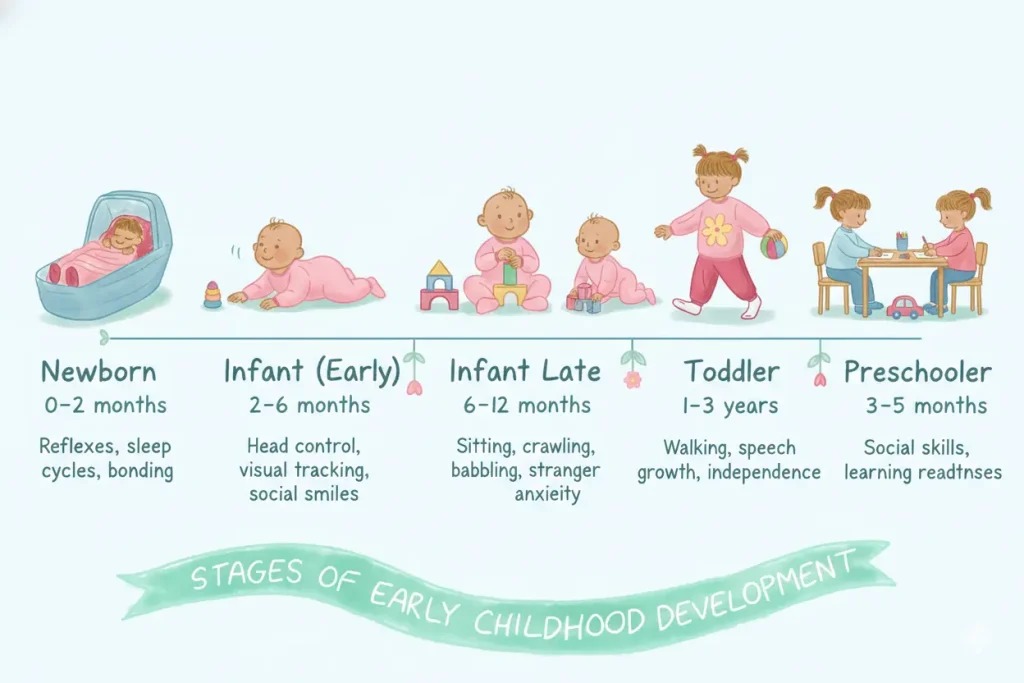
Age tells you which question is coming next. Read the ranges loosely, because every baby moves at their own pace.
| Baby’s stage | What to look at | Go to |
|---|---|---|
| Preparing for birth | Sleep space, transportation, and supplies for the first days | Newborn essentials |
| Birth to 3 months | Milk feeding, newborn care, and sleep questions | Newborn care basics |
| 3 to 6 months | Routine changes, new skills you notice, and getting ready for first foods | 3 to 6 months |
| 6 to 12 months | Readiness for solid food, mobility, and home safety | 6 to 9 months or 9 to 12 months |
| 12 to 24 months | Changing meals, movement, communication, and daily routines | 12 to 18 months or 18 to 24 months |
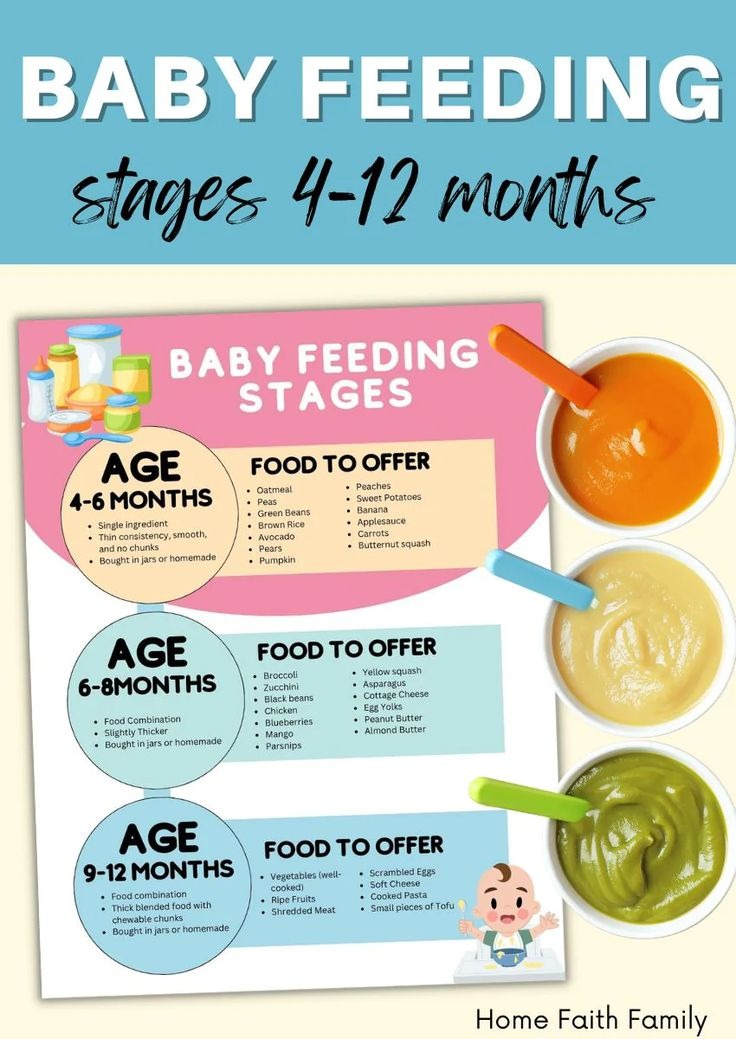
For a baby approaching six months, feeding is the next topic. The CDC describes introducing foods other than breast milk or infant formula at about six months and does not recommend introducing them before four months. Readiness means head and neck control, sitting with support, opening the mouth for food, and swallowing what is offered.
The CDC’s April 14, 2026 guidance covers both timing and readiness in introducing solid foods. Food choices and feeding methods are in the starting-solids guide.
Once your baby is exploring the floor and grabbing everything within reach, read about home safety and development.
Everyday Care: Feeding, Sleep, Diaper Changes, and Soothing
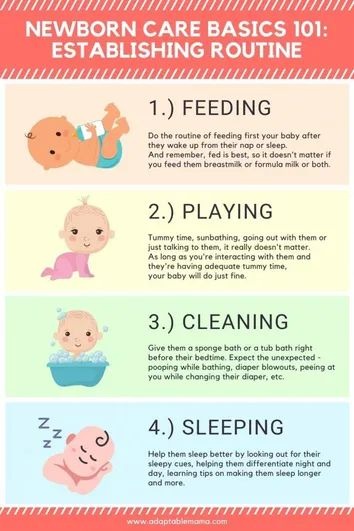
Pick the daily task that needs work. Feeding a newborn covers milk feeding and bottles. Newborn sleep covers waking and sleep patterns. Newborn care covers diapers, bathing, and umbilical care. For crying and comfort routines, use the soothing guide.
Safety Essentials: Sleep Space, Car Seat, and Product Checks
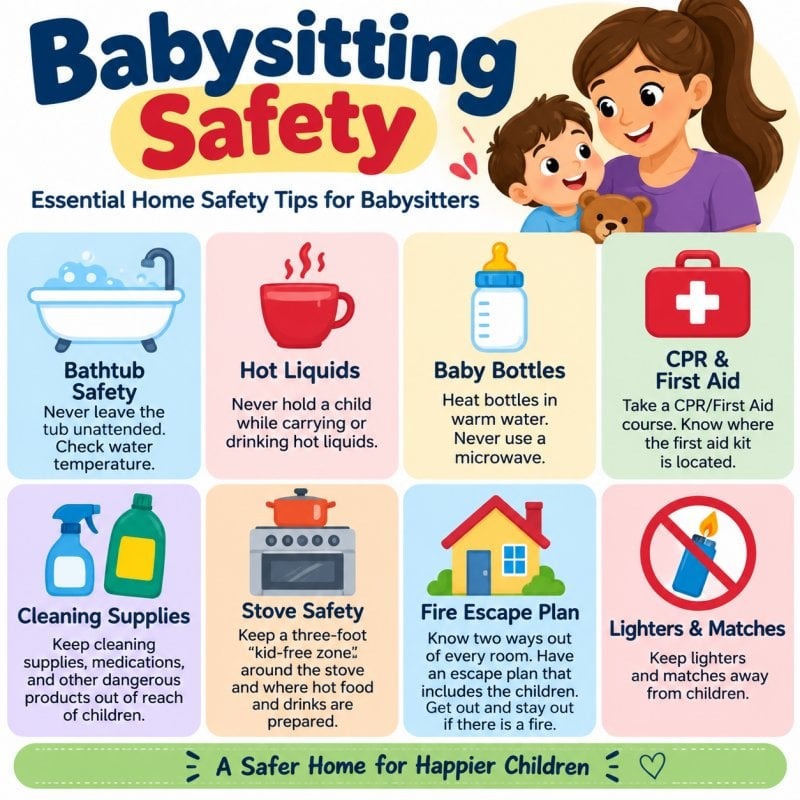
A crib, a car seat, and a hand-me-down each need a different check.
Where an infant sleeps
The Consumer Product Safety Commission names cribs, bassinets, play yards, and bedside sleepers that meet applicable federal requirements as infant sleep product categories. Use a firm, flat surface, put the baby down on their back, and keep the space bare except for a fitted sheet. See the CPSC safe-sleep guidance.
Swings, inclined rockers, and loungers are not infant sleep surfaces. If a baby falls asleep in one, move them to a crib, bassinet, or play yard. The CPSC also warns against weighted infant sleep products.
Which car seat fits the child
NHTSA recommends keeping a child rear-facing until they reach the car-seat maker’s rear-facing height or weight limit. Your child must fit the seat, and the seat must be installed correctly with the harness positioned as the instructions say. The NHTSA car-seat guidance explains those checks.

| Equipment or situation | What to check before use | Detailed guide |
|---|---|---|
| Crib, bassinet, or play yard | A sleep product that meets federal requirements, set up bare | Safe-sleep checklist |
| Swing, rocker, or lounger | Intended use; move a sleeping baby to a proper sleep space | Infant sleep-product safety |
| Infant or convertible car seat | Rear-facing limits, child size, vehicle compatibility, installation, harness fit | Choosing a car seat |
| Used or inherited gear | Exact model, instructions, condition, and recalls; for used car seats, known crash history | Baby-product recalls |
Do not use a secondhand car seat that was in a moderate or severe crash. After a minor crash, apply NHTSA’s minor-crash criteria and the manufacturer’s instructions. A stroller travel system still needs a car seat that fits your child and vehicle, plus any required compatible adapter.
What to Buy Before Birth and What Can Wait
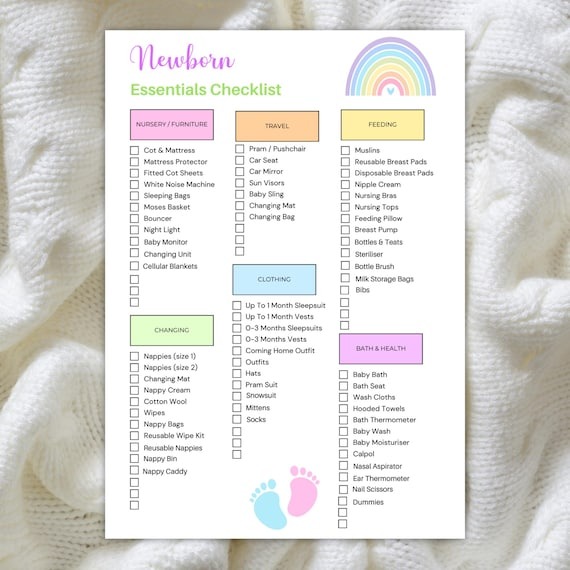
Buy the sleep space, the car seat, and the newborn care basics first. Convenience items can wait until you see how your days run. A high chair and other later-stage gear can wait until you need them.
| Prepare before it is needed | Consider if it solves a problem you have | Wait until its stage arrives |
|---|---|---|
| Infant sleep space | Wipe warmer, if it fixes a repeated annoyance | High chair for the later feeding stage |
| Car seat or other child restraint for travel | Portable sound machine, if you have a clear use for it | Portable high chair until outings call for one |
| Newborn care supplies for the first days | Extra bottles or accessories that match how you actually feed | Specialized solid-food gear until your baby is ready for solids |
A registry that looked complete
I thought I spent a lot of time curating my baby registry and researching baby products. I thought it was all minimal yet realistic and perfect and blah blah blah. But I still found that there were a lot of things I wanted and thought I had to have that I just never used or cared for. Fast table high chair: It was almost a year and I never used it once. I see people using it in public often, but I don’t know. I never ended up feeling like it was needed.
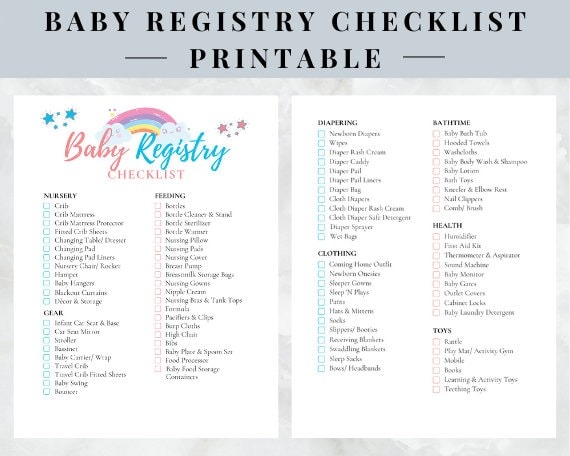
A family that often eats out might get plenty of use from the same item. For a fuller list, use the baby registry checklist.
When a Routine Doesn’t Fit

A routine that works in one home can stop working in another. You may need to change the order of calming steps, who does which task, or the timing as you learn what works for you.
Everyone warned me about sleepless nights and diapers, but what surprised me most was how much trial and error there is in those first weeks. Some advice worked instantly. Other “must-do” tips didn’t work at all for us. And a few things I learned by pure accident ended up being lifesavers.
If a soothing tip keeps failing, work out what is wrong with it: the timing, the order of steps, or the effort it takes from you. The soothing guide covers comfort techniques, and the sleep hub covers everyday sleep questions.

Track Development and Find Reliable Guidance
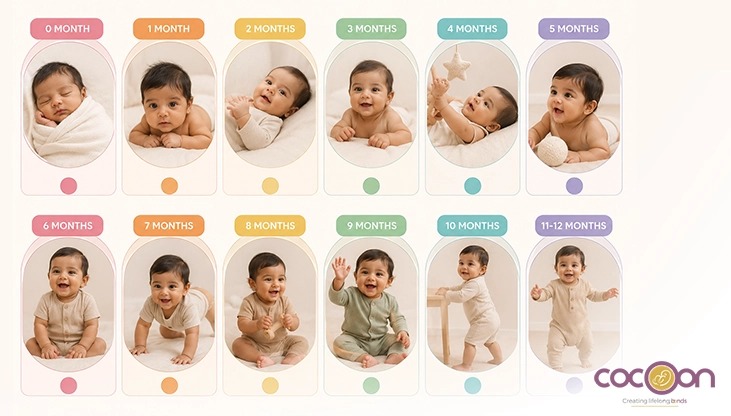
Milestone checklists help you notice and describe your baby’s skills. The CDC provides them at 2, 4, 6, 9, 12, 15, 18, and 24 months.
If something on the 9-month checklist worries you, write down what you have seen and use the developmental milestones guide to prepare for the conversation with your pediatrician.
Which source covers what
- American Academy of Pediatrics and your clinician: Infant health questions, clinical care, and pediatric safe-sleep guidance.
- Centers for Disease Control and Prevention: Infant feeding information and developmental milestone checklists.
- National Highway Traffic Safety Administration: Child-restraint selection, installation, and passenger safety.
- Consumer Product Safety Commission: Product hazards, infant sleep-product guidance, and consumer-product recalls.